


Waste management
ICEA/Espelia advises public authorities and international donors on sustainable waste management.
Your challenges
Controlling the increase of waste volumes
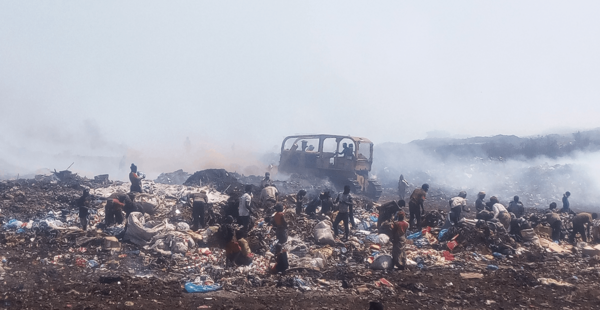
Consumption patterns related to economic and urban growth often lead to an increase in waste generation. In countries with high densities of poor populations and informal settlements, the waste management models of developed countries are generally ineffective (vehicles fleet that are not adapted to the urban context, low capacity to pay for the service). The result is often a sub-optimal level and quality of service (non-existing management service, uncontrolled dumping, piles of waste in waterways). It is therefore essential to design waste management systems that are well adapted to local socio-economic realities.
Reducing the burden of the sector on public finances
In many countries, the public authorities' budgets are highly constrained and they face difficulties to make available the necessary financial resources for proper waste management. In this context it is essential to secure own resources to cover the services' costs : tax on waste collection, fees, revenue from the sale of recycled materials, eco-taxes, etc.
Structuring and modernizing waste management and recovery systems
Considering the high number of stakeholders - including formals one - generally involved in waste management in Southern countries, the public authorities' capacity to structure waste management systems is a key element in ensuring service efficiency at all levels (coverage rate, recovery rate, agents' productivity, environmental protection, etc. ). It is also a determining factor in integrating innovative waste management solutions (particularly energy recovery from waste). For all these reasons, capacity building of the sector's actors is fundamental.
Strengthening the private sector's involvement
The development of the waste management sector requires investment and skills that the public sector is not always able to provide. Turning to the private sector can be an opportunity to benefit from high quality and rapidly available know-how, at a lower cost to public finances.
Private waste management actors can thus be mobilized on most of the value-chain, from pre-collection to collection, operation of landfills and recycling.
To attract the private sector, it is essential to ensure a stable regulatory and economic framework to secure investments for service's improvement.
Our solutions
Our experts work with public decision-makers in the design and implementation of institutional, economic, financial and organizational solutions for solid waste collection, treatment, recycling and disposal.
- Organisational performance
Diagnosis and optimization of service performance
Recommendations for the evolutions of the institutional set-up
HR management and capacity building
Private sector participation
Integration of the informal sector
- Contractualization
Monitoring and auditing of complex contracts
Contract engineering and PPP design
- Service economic and financial sustainability
Definition of the cost recovery method
Financial modelling and design of tariff and tax structures
Household surveys on users' willingness/ability to pay
- Project diagnosis
Identification of investment projects
Studies of the technical and economic feasibility of projects
What sets us apart
- An expertise based on the combined knowledge and experience of the Espelia and ICEA teams, who have been working in the sector for over 20 years in France and internationally. The management framework for waste management services in France, which is advanced and well structured, can serve as a reference point for developing solutions adapted to local contexts.
- A comprehensive approach towards waste management, considering sanitation and drainage, which are often linked in Southern countries, as well as recent developments (necessary volume reduction, circular economy, reuse, recycling)
- Continuous attention to the defense of the general interest and our interventions' impact. Our advisory support is directed towards operational and concrete actions and recommendations, which move the lines on the ground.
- A spirit of partnership, which aims at the co-construction of solutions with local counterparts.
Customer case
25 years of experience at the service of public interest

Study mission of organizational, institutional and tariff aspects related to urban sanitation - Mali
Dec 1, 2021
Read more
Development of quantified feasibility models and an action plan for the implementation of composting and recycling options for primary waste collection in Monrovia, Paynesville, and surrounding townships - Liberia
Dec 1, 2021
Read more
Supply of a knowledge product on “Smart Technologies for more equitable city economies”
Nov 29, 2021
Read more
Espelia supports local authorities, public stakeholders and their partners in the design, management and transformation of local public policies. A consulting firm committed to serving the public interest, Espelia mobilises strategic, legal, financial and operational expertise to help territories build sustainable and resilient solutions.